Easy Self-Hosting Alternatives to Big Tech SaaS in 2026
Turn-key platforms have quietly solved the hard part of self-hosting. Here's what changed, what you can replace today, and what it actually costs.

- 01SaaS subscription costs are rising five times faster than general inflation across G7 economies.
- 0286% of enterprise CIOs now plan to move at least some public cloud workloads back on-premises.
- 03Turn-key platforms have eliminated the configuration barrier with one-click deployments for hundreds of apps.
- 04The global self-hosting market is projected to surge from $15.6 billion in 2024 to $85.2 billion by 2034.
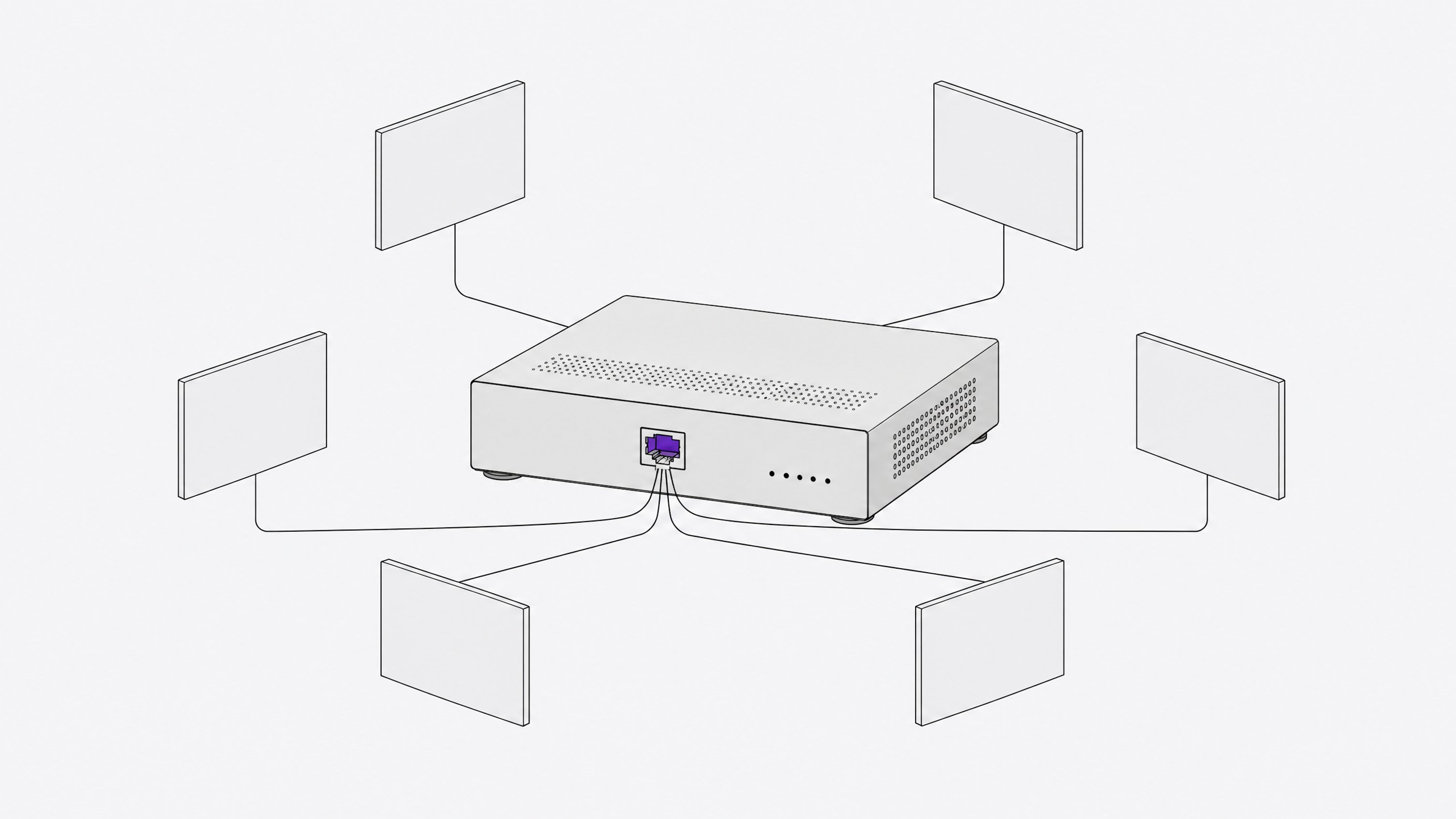
The easiest self-hosting alternatives to big tech SaaS right now are turn-key platforms: Coolify, Elestio, Umbrel, YunoHost, CasaOS. They install a stack of open-source apps on a server or home box in a few clicks, replacing Dropbox, Trello, Slack, and LastPass without making you hand-configure Docker or a database. That's the short answer. The longer one is why this went from hobbyist curiosity to a default worth considering.
Why people actually search for this
Most people looking for self-hosting alternatives aren't chasing an ideology. They're reacting to something concrete: a price hike, a feature paywalled behind a new tier, a service that changed its terms and kept their data hostage in the process. Self-hosting means moving your data and software off a vendor's servers and onto infrastructure you control. It's not new. Self-hosted email, photo galleries, and blogging software all predated their SaaS equivalents, not the other way around.1
What's new is the scale of the frustration. SaaS pricing has climbed roughly 5x faster than general inflation, about 11.4% year over year against 2.7% across G7 economies.2 Slack raised Enterprise pricing 40-125% in August 2024. Salesforce, Adobe, Monday.com, and Snowflake all pushed through double-digit hikes, frequently justified by AI features nobody asked for.2 Meanwhile the average company now runs somewhere around 130 SaaS applications, up from about 8 in 2015.3 That's not a stack anymore. That's sprawl, with a subscription bill to match.
What does self-hosting actually mean?
Self-hosting means running the software yourself, on a server, VPS, or home machine you control, instead of renting access to someone else's copy of it. You own the data, the uptime, the configuration. You also own the maintenance. SaaS rents you an outcome. Self-hosting gives you the asset. Our piece on local-first software goes deeper on the architectural side of this shift, but the practical version is simpler than it sounds once you look at what's actually available today.
What's driving the shift back to self-hosting
A few separate trends are pushing in the same direction at once.
- The SaaS trust tax. Barclays' Q4 2024 CIO survey found 86% of CIOs now plan to move at least some public cloud workloads back on-premises, double the rate seen in 2020.24 That's not a fringe sentiment. That's a majority of enterprise technology leaders reconsidering cloud-as-default.
- License-change betrayals. When vendors change the rules, communities fork fast. Broadcom's VMware acquisition triggered price increases of 800-1,500%, and Proxmox VE's installed base grew 650% in response.2 HashiCorp's Terraform license change produced OpenTofu, which hit 33,000 GitHub stars within a month.2 Redis's license change spawned Valkey in eight days, backed by AWS, Google Cloud, and Oracle.2 Renting means the landlord can change the lease overnight.
- AI infrastructure economics. Running your own inference stack now has a real payback point, not just a philosophical appeal.
- Data sovereignty regulation. Governments have turned self-hosting into procurement policy. Germany's Schleswig-Holstein state committed to replacing Microsoft Office with LibreOffice across 30,000 workstations, and France's National Gendarmerie has run Ubuntu on 72,000-plus desktops since 2014, saving an estimated €30 million.2
- Tooling maturity. Docker adoption among IT professionals has hit 92%, and Kubernetes reached 80% production adoption in 2024.2 The plumbing self-hosting depends on is no longer exotic.
The economics behind the shift aren't hypothetical either. Andreessen Horowitz's Cost of Cloud analysis found cloud spend often runs 50-80% of cost of revenue for software companies, and that repatriating workloads can cut infrastructure costs by a third to a half.5 37signals put a real number on that logic: it projected $7 million in savings over five years by leaving AWS, without adding operations headcount.6
Is self-hosting still too hard?
For years the honest answer was yes, it took a systems administrator's worth of patience. That's no longer true. Coolify, an open-source alternative to Heroku or Vercel, now offers over 280 one-click services and has surpassed 500,000 self-hosted instances.2 Elestio and Umbrel apply the same one-click model to managed VPS deployments and home servers respectively. YunoHost and CasaOS extend it further into consumer hardware, turning a spare mini PC into a private cloud with an app store interface.
The community numbers back this up. The r/selfhosted subreddit has grown roughly 7x in five years to over 550,000 members, and the awesome-selfhosted list on GitHub has accumulated somewhere between 273,000 and 317,000 stars, putting it among the most-starred repositories on the platform.27 This is now a large enough category that market researchers track it: the global self-hosting market was worth an estimated $15.6 billion in 2024 and is projected to reach $85.2 billion by 2034, with enterprises accounting for 82.7% of end users.7
What can you self-host today instead of paying for SaaS?
The turn-key platforms above ship with app catalogs that map almost directly onto the SaaS tools people already pay for.
- Cloud storage. Nextcloud or Seafile, deployable in one click on most platforms, replace Dropbox or Google Drive, and pair naturally with the object storage backends now doing the heavy lifting behind the scenes.
- Project management. Plane, Vikunja, or Focalboard replace Trello, Asana, or Linear for teams that don't need enterprise-scale collaboration features.
- Password managers. Vaultwarden, a lightweight Bitwarden-compatible server, replaces LastPass or 1Password's cloud vault.
- Analytics. Umami or Plausible replace Google Analytics without shipping visitor data to a third party.
- AI chat. Open WebUI paired with a local model replaces a ChatGPT subscription for teams comfortable running their own inference.
Most of these run comfortably as single processes with no orchestration overhead, an approach detailed in our rundown of single-binary self-hosted tools. For readers weighing the pattern across a whole build-vs-buy decision, our piece on the open-source infrastructure boom walks through the calculus in more detail.
What does self-hosting actually cost?
Self-hosting isn't free, and turn-key tooling doesn't change that math. It just moves the difficulty from configuration to operations. A small in-house team running self-hosted infrastructure, three to five people, costs an estimated $500,000 to $1.5 million annually before hardware.2 That's a serious commitment for a mid-sized organization, and an irrelevant one for someone running a home server, but it matters for any business weighing this seriously.
Security is the other side of the ledger. The average global data breach now costs $4.88 million, a 10% jump and the largest increase since the pandemic.8 When you self-host, you own the patching, the monitoring, and the incident response a SaaS vendor previously handled as part of the subscription.
| Deployment target | Setup effort | App catalog | Best for | |
|---|---|---|---|---|
| RecommendedCoolifyself-hosting general SaaS replacements on a server or VPS | Server / VPS | Low | 280+ one-click services | Teams wanting a Heroku/Vercel-style deploy flow |
| Elestiomanaged self-hosting without server admin | Managed VPS | Low | Curated managed apps | Those wanting self-hosting with vendor-managed ops |
| Umbrela private home cloud | Home server | Low | Consumer app store | Personal use on spare hardware |
| YunoHost / CasaOSturning consumer hardware into a private cloud | Home / consumer hardware | Medium | App-store interface over Docker apps | Hobbyists extending the model to mini PCs |
Institutional follow-through matters as much as technical feasibility. Munich's LiMux project migrated 15,000 desktops to Linux and saved an estimated €11.7 million, only to be reversed in 2017 at a cost of €49.3 million after political will collapsed.2 The lesson isn't that self-hosting fails. It's that it requires sustained commitment, not just a successful pilot.
How to decide what to self-host vs. keep renting
A workable framework comes down to three questions.
- How sensitive is the workload? Data you'd be embarrassed or liable for losing, customer records, financial data, proprietary source, is a stronger candidate for self-hosting than a tool used for internal scheduling.
- Do you have the technical capacity to operate it? One person comfortable with a VPS and Docker can run Nextcloud or Vaultwarden reliably. A finance team running payroll software cannot improvise incident response at 2am.
- How elastic is the demand? Steady, predictable workloads favor owning the infrastructure. Spiky, unpredictable ones favor renting elasticity from a cloud provider, at least until the pattern is well understood.
Run those three questions against your actual SaaS bill, not against the industry narrative in either direction. Some tools belong on a vendor's servers. Increasingly, though, a meaningful slice of what companies rent by default, storage, project tracking, password management, even AI chat, can be owned outright with an afternoon of setup and a platform that does the hard part for you. For organizations formalizing this as policy rather than a one-off project, governance platforms like Remy can help track which tools are owned, which are rented, and where the accountability sits for each. That's the actual shift here: not a rejection of the cloud, but a return to treating software as something you can choose to own.
Self-hosting means running software on a server or device you control instead of renting access to it from a SaaS vendor. You own the data and the configuration, and you take on the maintenance in exchange.
Coolify, Elestio, Umbrel, YunoHost, and CasaOS are built for this. They provide one-click app catalogs so you can deploy replacements for tools like Dropbox, Trello, or LastPass without manually configuring Docker or a database.
It depends on scale. Individuals and small teams often save money quickly. Larger organizations need to weigh operations staffing, estimated at $500,000 to $1.5 million a year for a small team, against SaaS subscription costs and cloud repatriation savings, which analysts put at roughly a third to a half of prior cloud spend.
Common swaps include Nextcloud or Seafile for cloud storage, Plane or Vikunja for project management, Vaultwarden for password management, Umami or Plausible for analytics, and Open WebUI with a local model for AI chat.
Security and operational continuity. You take on patching, monitoring, and incident response yourself. Data breaches now average $4.88 million globally, and self-hosted systems carry that risk directly rather than through a vendor's shared responsibility model.
- 1Want to break free from big tech? 'Self-hosting' could be the answerThe Conversation
- 2Why is self-hosting making a comebackPlane
- 3SaaS Statistics By Revenue and Facts (2025)Electro IQ
- 4Cloud Repatriation on the Rise — 83% of CIOs Plan Workload Shifts in 2024EE Times
- 5The Cost of Cloud, a Trillion Dollar ParadoxAndreessen Horowitz (a16z)
- 6We stand to save $7m over five years from our cloud exit37signals / HEY World (DHH)
- 7Self Hosting Market Size, Share | CAGR of 18.5%Market.us
- 8Surging data breach disruption drives costs to record highsIBM Security