Run Powerful AI Models Locally on One GPU: The Bonsai 2 and Qwen3.8 Math
A 5.9GB compressed model, a 262K-context base model, and a break-even calculator all point the same direction. Here's the real math on running powerful AI on one GPU you own.

- 01Qwen3.8-27B packs natively multimodal, 262K-context capabilities into a model that fits on a single 24GB GPU.
- 02Bonsai 2 shrinks Qwen3.8-27B to just 5.9GB using ternary compression, retaining 98.2% of its performance.
- 03Heavy users processing 2 million tokens daily can break even on a used $1,240 RTX 3090 setup in five months.
- 04At enterprise volumes, local inference clusters can cost up to 14x less annually than frontier cloud APIs.
Yes, you can run a genuinely capable AI model on a single consumer GPU today. Depending on how much you use it, owning that GPU can beat renting API access within months. That's the short answer. The longer answer involves two models released a month apart in 2026, and a token-volume math problem most teams haven't bothered to run.
What changed: a real model gets compressed to actually fit
Alibaba's Qwen team shipped Qwen3.8-27B on August 14, 2026, under an Apache 2.0 license.1 It's a 27.78-billion-parameter dense model that's natively multimodal, handling text, images, and video, including hour-scale video, in a single checkpoint.12 It carries a native context window of 262,144 tokens, extensible to 1 million via YaRN.2
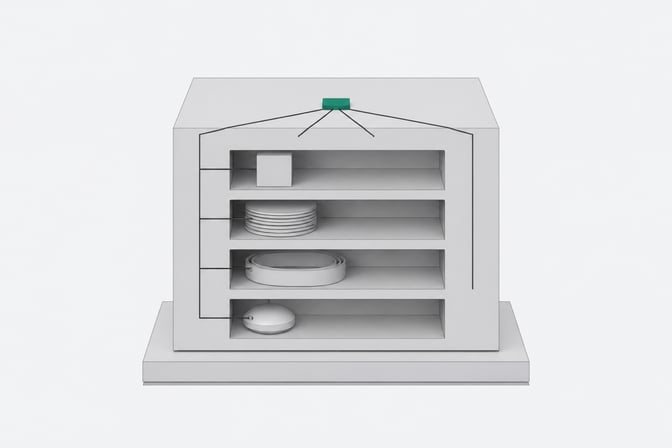
The part that matters for a single GPU is the architecture underneath. Qwen3.8-27B uses hybrid attention, and only 16 of its 64 decoder layers build a per-token KV cache.3 That inverts the usual local-deployment problem: weights dominate the memory budget, not context length. A 24GB card can carry 64K to 96K tokens of context at 4-bit without strain.3 The official BF16 checkpoint is 55.6GB and needs an 80GB-class card, but a third-party Q4_K_M GGUF quant comes in around 17.1GB, which fits comfortably on a single RTX 4090.324
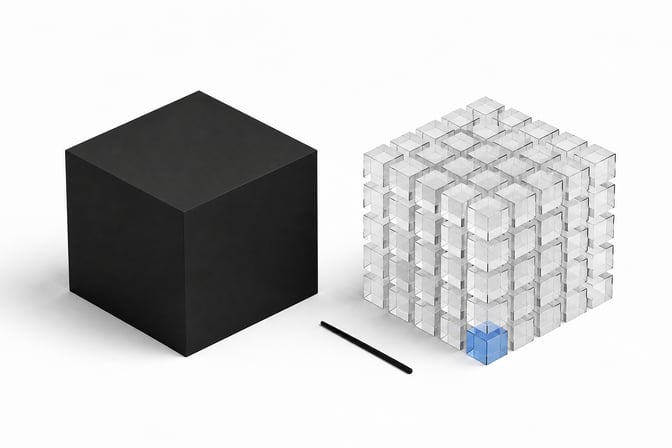
Then, on September 17, 2026, PrismML released Bonsai 2 27B, a direct compression of that same Qwen3.8-27B base.5 It uses ternary weights, values of -1, 0, or +1, with FP16 group-wise scaling, landing at 1.76 effective bits per weight.5 The result is a 5.9GB total footprint, more than nine times smaller than the full-precision model, while retaining 98.2% of aggregate benchmark performance.56 It's small enough to run on an 8GB consumer GPU, and light enough to run in-browser via WebGPU.67 On an RTX 5090 it hits 143 tokens per second.5 Bonsai 2 is an iteration on PrismML's original Bonsai 27B from July 2026, which was built on the older Qwen3.6-27B and retained roughly 95% of benchmark performance. Switching to Qwen3.8-27B as the base pushed retention past 98%.58
Put those two releases together and you get the same underlying model available at three very different hardware tiers: an 80GB card for full precision, a 24GB card at 4-bit, or an 8GB card at ternary compression. That's the technical unlock behind the break-even math on local models that has been shifting all year.
What does renting actually cost?
Hosted API access to Qwen3.8-27B itself, through OpenRouter, runs about $0.15 per million input tokens and roughly $1.875 to $2 per million output tokens, depending on provider.9 That's cheap per token, but it's still a recurring bill on an open-weight model you could otherwise own outright.
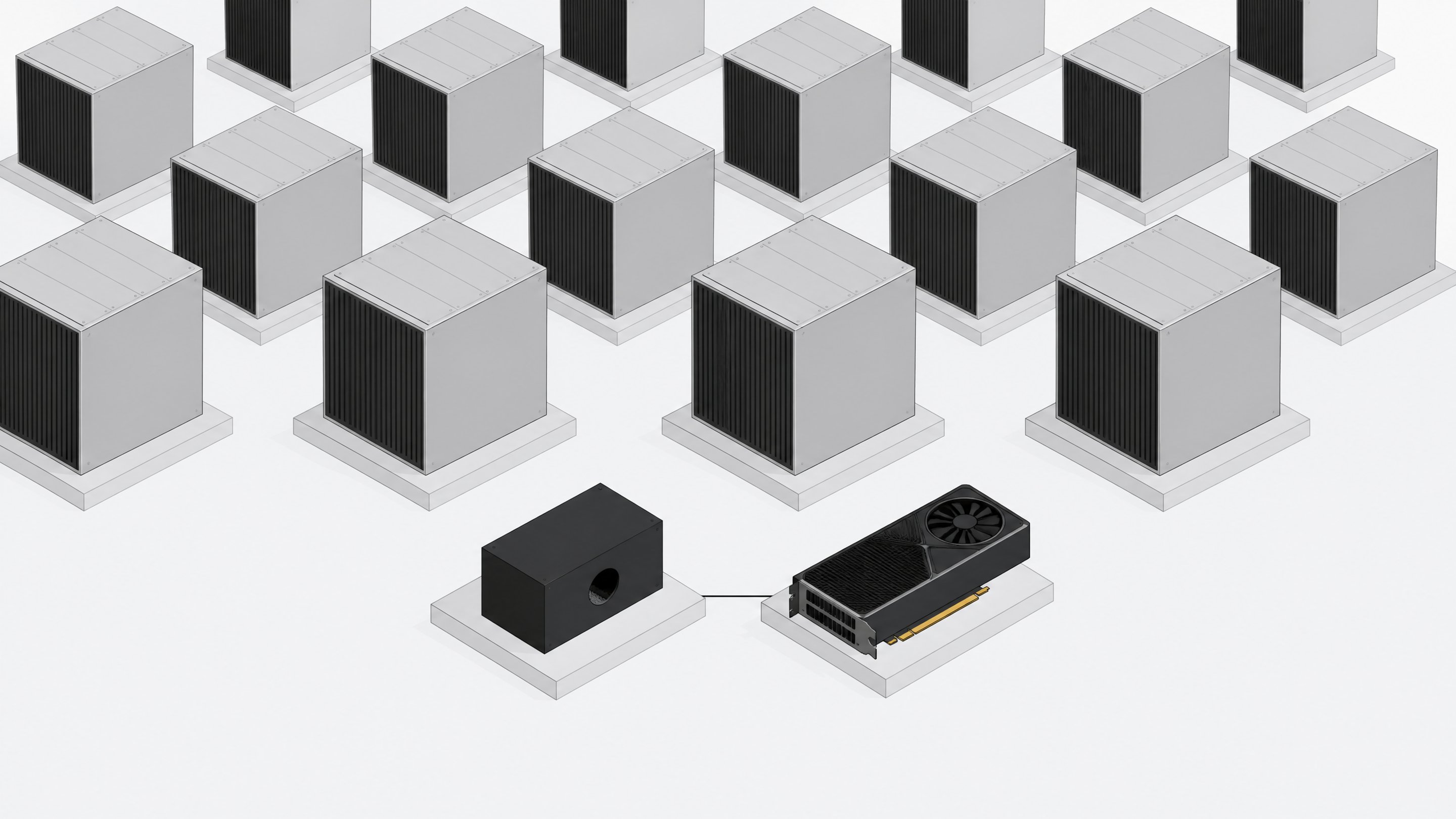
Zoom out to enterprise spend and the recurring-cost picture gets bigger. Enterprises spent an average of about $1,240 per employee per year on AI in 2026, rising to $3,200 per employee in financial services.10 AI now makes up 20% to 25% of total SaaS spend at enterprise scale, up from roughly 12% in 2024.10 A total-cost-of-ownership comparison from Cognisoc found that at enterprise volume, local inference clusters run 4x to 14x cheaper annually than frontier cloud APIs, with a six-GPU RTX 4090 setup costing about $1,053 a month against roughly $15,000 a month for equivalent frontier API usage.11
What does owning the GPU actually cost?
The upfront number is the part everyone gets stuck on, and it's gotten uglier in 2026. An AI-driven memory shortage pushed GDDR7 and HBM prices up sharply, and the RTX 5090's U.S. median street price rose from $4,299.99 in June 2026 to $4,699.99 in August, more than double its $1,999 launch MSRP.12 If you're buying new flagship silicon in 2026, you're paying a premium that didn't exist a year earlier.
But you don't need a 5090 to run either model well, and used hardware changes the real cost of self-hosting entirely. LLM Configurator's break-even analysis found that for a heavy user processing about 2 million tokens a day, a used RTX 3090 build costing roughly $1,240 runs an open-weight model at about $76 a month all-in, versus roughly $285 a month for the equivalent volume on GPT-4o.13 That hardware pays for itself in about five months.13 Below roughly 200,000 tokens a day, the same analysis found cloud APIs stay cheaper indefinitely, so this isn't a universal answer. It's a volume-dependent one.13
Renting vs. running, side by side
Line up the three real options a team has right now:
- Cloud API (e.g., GPT-4o, Claude Sonnet, or hosted Qwen3.8-27B). No hardware cost, no maintenance, frontier-tier capability on the closed models, but a per-token bill that scales linearly with usage and never stops.910
- Local Qwen3.8-27B on a 24GB GPU. Full 262K-context, natively multimodal, agentic model, running at 4-bit quantization on hardware you own outright, with a one-time cost and no metering, but a startup investment that's currently inflated by GPU shortages.1312
- Local Bonsai 2 27B on an 8GB GPU. The same underlying capability compressed into 5.9GB, retaining 98.2% of benchmark performance, runnable on far cheaper or older hardware, even a laptop GPU or in-browser via WebGPU.567
The break-even point moves depending on which of the three you're comparing against your actual daily token volume, but the direction of travel is the same across every model in this pool: as volume rises, owned hardware wins, and it wins faster than it used to. That's the same conclusion the run-local-LLM break-even math has been converging on across several model generations now.
The catches nobody puts on the slide
None of this is free of asterisks. Three are worth knowing before you buy a GPU on the strength of a benchmark chart:
- Qwen3.8-27B defaults to absurd overthinking. The model ships with reasoning_effort set to "xhigh" out of the box. Simon Willison's pelican-SVG test took 21 minutes and burned 22,276 reasoning tokens on that default setting.14 Turning reasoning down to a lower setting cut the same task to about 137 seconds.15 Deploy this model locally without touching that setting, and you'll burn compute and patience on tasks that don't need it.
- The benchmark table is vendor-run. Every headline number for Qwen3.8-27B comes from Qwen itself, and several of the benchmarks in that table are in-house or modified versions of standard tests.2 That doesn't mean the numbers are wrong, but it means they deserve the same skepticism you'd apply to any vendor's own slide deck.
- Full context costs more memory than the weight file suggests. The compressed weight file gets all the attention, but running the full 262K-token context window still requires real memory: the KV cache alone can run into the double-digit gigabytes at full precision, on top of whatever the weights themselves take up.2 A 24GB card handles this fine at moderate context and 4-bit quantization, but pushing toward the full context window changes the calculus.32
GPU prices are also not stable. The 5090's climb from $1,999 to nearly $4,700 in two months shows the hardware side of this math can move under your feet just as fast as the software side improves.12
When does owning a GPU beat renting the API?
The decision isn't ideological, it's arithmetic, and it depends on a few concrete inputs:
- Daily token volume. Below roughly 200,000 tokens a day, renting stays cheaper indefinitely. Above a few million tokens a day, owned hardware breaks even in months, not years.13
- Need for frontier-tier reasoning. If your workload genuinely needs the top rung of closed-model capability, no local model, compressed or not, is claiming to match it yet. Bonsai 2 retains 98.2% of its base model's benchmark performance, not 100%.5
- Compliance and data residency. If the workload can't leave your infrastructure for legal or contractual reasons, local ownership wins by default and the token-volume math becomes secondary.
- Tolerance for setup and tuning. Local deployment means you're the one turning off xhigh reasoning, managing quantization, and monitoring GPU memory. That's a real cost, even if it's not a dollar figure.1415
| Upfront cost | Hardware needed | Context window | Performance vs. frontier base | Setup & tuning burden | |
|---|---|---|---|---|---|
| Cloud API (GPT-4o, Claude, or hosted Qwen3.8-27B)low daily token volume | $0 | None | Up to 1M (hosted) | Frontier-tier on closed models | Low |
| Local Qwen3.8-27B (24GB GPU, 4-bit)full 262K-context, multimodal, agentic use | ~$1,200-$4,700 GPU | 24GB VRAM | 262K native, 1M via YaRN | Full-precision base model | Medium |
| Local Bonsai 2 27B (8GB GPU, ternary)cheapest hardware, in-browser use | ~$200-$1,200 GPU | 8GB VRAM | Same base (262K) | 98.2% of base benchmark score | Medium |
This is the same lens the ownership-versus-rental question always comes back to on this beat: figuring out which pieces of your stack you actually control, and deciding deliberately rather than defaulting to whatever comes with a monthly invoice. Tools like Remy exist for exactly that kind of build-vs-buy decision, mapping what you're actually running against what you're actually paying for it.
Verdict
Do Bonsai 2 and Qwen3.8 justify local AI ownership? For teams processing meaningful daily volume, yes, with real qualifications. Qwen3.8-27B proves a single 24GB GPU can run a frontier-adjacent, agentic, 262K-context model.13 Bonsai 2 27B proves that same capability can shrink to 5.9GB and run on hardware nearly anyone already owns.56 The token-volume math has genuinely flipped for heavy users: a used GPU that pays for itself in five months isn't a hobbyist's argument anymore, it's a line item a finance team should be running.13 But it's not universal. Light users, compliance-light workloads, and anyone chasing the very top of frontier capability still have good reasons to keep renting. The honest answer to "can I run a powerful AI model on one GPU" is yes. The honest follow-up question is whether your usage justifies it. Run the numbers before you run the model.
Treat them with some caution. Independent analysis has noted that every published benchmark score for Qwen3.8-27B comes from Qwen itself, and some of those benchmarks are in-house or modified versions of standard tests.2 The numbers aren't necessarily wrong, but they haven't been independently reproduced.
- 1How to Run Qwen 3.8 Locally: 27B on 16–24GB GPUs (2026 Guide)Codersera
- 2Qwen3.8-27B: Benchmarks, Specs, Local Hardware and VerdictKingy AI
- 3Qwen3.8-27B on Runpod: The theory behind frontier-class agentic coding that fits on a single 24GB workerRunpod
- 4How to Run Qwen 3.8 27B Locally: Ollama, GGUF, and Single-GPU Setup (2026)Yotta Labs
- 5Introducing Bonsai 2 27B: Near-Lossless Compression in a 9x Smaller FootprintPrismML
- 6The 'Ternary Bonsai 2 27B' is an AI model that reduces the size of the Qwen3.8 27B to 5.9GB while maintaining 98.2% of its performanceGIGAZINE
- 7Ternary Bonsai 2 (27B) just released on Hugging Face. At <6GB in size, it can even run locally in-browser on WebGPU.Reddit r/LocalLLaMA
- 8Announcing Bonsai 27B: The First 27B-Class Model to Run on a PhonePrismML
- 9Qwen: Qwen3.8 27B — API Pricing & BenchmarksOpenRouter
- 10AI Spend per Employee 2026Presenc AI
- 11The Cost of Cloud LLM APIs vs Local Inference: A TCO AnalysisCognisoc
- 12Gaming GPU Prices Surge: RTX 5090 Tops $5,000 [2026]Tech Insider
- 13Local AI vs Cloud API Costs: The Real Break-Even Math (2026)LLM Configurator
- 14Qwen 3.8 27B is excellent, but it defaults to wildly overthinking thingsSimon Willison's Weblog
- 15Alibaba Ships Qwen 3.8 27B With Maximum Reasoning Effort Turned On by DefaultImplicator.ai