5 Ways AI Training Cutoffs Quietly Break Employee-Built Automations
Every model has a training cutoff, and every automation built on top of it inherits that frozen worldview. The gap between then and now is technical debt nobody assigned anyone to watch.

- 01AI models explicitly shown deprecated context still use outdated APIs over 70 percent of the time.
- 02Nearly 20 percent of AI-generated code samples recommend hallucinated software packages.
- 03Older AI models score drastically lower when tested against recently updated policies and guidelines.
- 04More than 75 percent of employees use their own AI tools outside of IT-approved channels.
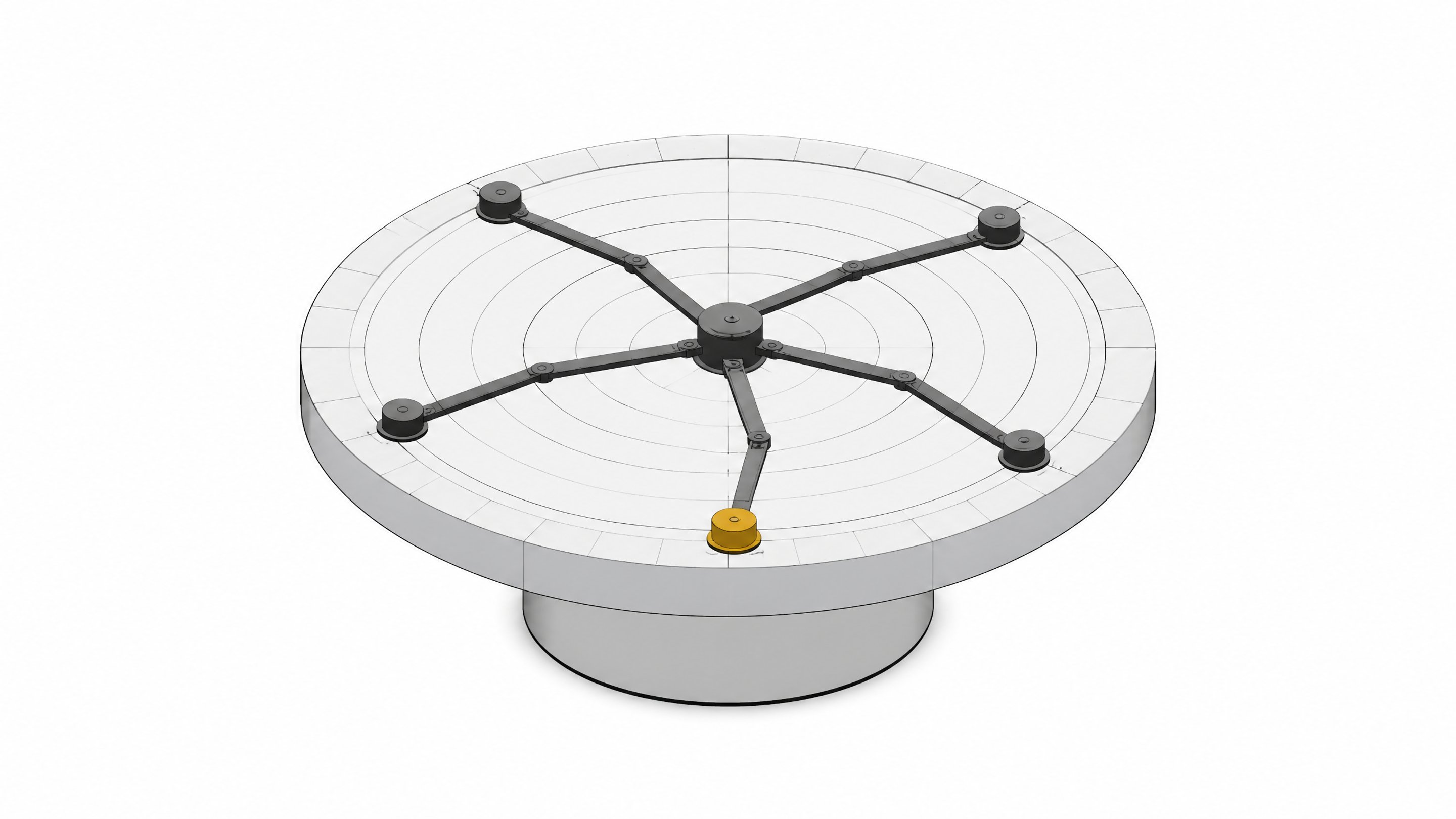
A training cutoff is the date after which a large language model has seen no new data: no new library releases, no new API changes, no new regulatory language, no new security advisories.1 Retraining a model to move that date is expensive enough that it happens rarely, so the gap between a model's cutoff and today's date only grows.1 That gap is fine if you know it's there and manage around it. It's a liability if an employee built a workflow automation on top of it eighteen months ago and nobody has looked at it since.
What 'stale AI' actually means
Stale AI is not the same thing as model deprecation. Deprecation is a vendor formally retiring a model version. Staleness is quieter: the model is still running, still answering, still confidently wrong about anything that changed after its cutoff. The spread inside a single vendor's own lineup shows how easy this is to miss. GPT-4's knowledge cutoff was September 2021, GPT-4 Turbo's was December 2023, and GPT-5's was September 2024.1 Three models, three very different windows onto the world, all answering the same prompt with the same tone of confidence.
Retrieval-augmented generation can hand a model fresh facts at query time, but it doesn't fix the underlying problem. The model's baseline reasoning, its defaults, and its sense of what's "normal" are still anchored to training data that stopped moving on a fixed date.1 For an IT-vetted product, someone tracks that drift. For an automation an employee wired together over a weekend, as covered in how ChatGPT memory quietly becomes internal software, nobody does.
1. Outdated library and API calls silently break automations
Ask a model to write code and it reaches for the patterns it saw most often in training, which are frequently the oldest, most widely documented ones. A study evaluating seven frontier LLMs across 145 API mappings found most models scored below 30% on API Usage Plausibility for popular Python libraries, meaning the code they generated often didn't match current library behavior at all.2 Worse, when the same models were explicitly shown deprecated context, they still used the deprecated API 70 to 90 percent of the time.2 That's not an edge case. That's the default.
An employee-built automation that calls a vendor SDK, a data pipeline library, or an internal API wrapper is exactly the kind of code this hits hardest. Nobody runs a linter against it, and nobody's CI catches the breakage until the automation just stops working one Tuesday morning.
2. Dependency and package recommendations drift into risk
Stale training data doesn't just misuse existing packages. It invents ones that don't exist, or recommends real ones that have quietly become dangerous. Across 576,000 code samples generated by 16 LLMs, package hallucinations (recommending packages that are not real) occurred in 19.7% of cases, with open-source models hallucinating at 21.7% versus 5.2% for commercial models.3 Worse, 43% of those hallucinated names repeated consistently across the same prompt, which means they're stable enough for an attacker to register and wait.3 Security researchers call this slopsquatting.
Sonatype's 2026 supply chain report tested 36,870 real AI-generated dependency-upgrade recommendations and found 27.76% referenced package versions that don't exist.4 GPT-5 was 98% accurate when it expressed high confidence in a recommendation, but it only did that 3.68% of the time, and nearly half of its low-confidence answers were still wrong.4 In the same study, following AI-recommended upgrades actually made the security posture worse for 345 components, in some cases by pointing teams toward packages that had already been compromised in real attacks after the model's training cutoff.4 A model trained before a package was hijacked has no way of knowing it was hijacked.
3. Why do compliance rules baked into automations go stale?
The clearest evidence that cutoff recency degrades output quality on a moving target comes from clinical guidelines. In a controlled study, models with an older cutoff (GPT-3.5-Turbo, Llama-2) scored 76% and 25% on questions consistent with an updated guideline, while models with a later cutoff (GPT-4o, Llama 3.3) scored over 90%.1 Swap "clinical guideline" for "internal pricing policy," "data-retention rule," or "regional tax logic," and you have the exact failure mode of an employee-built automation that hard-coded compliance reasoning into a prompt and never touched it again. The rule changed. The automation didn't notice, because nothing told it to.
4. Nobody owns the refresh cycle, because nobody knows the tool exists
This is the compounding factor that makes the first three worse. Gartner surveyed 302 cybersecurity leaders in early 2025 and found 69% suspect or have evidence that employees are using prohibited public GenAI tools.5 Microsoft's 2024 Work Trend Index, covering 31,000 respondents across 31 countries, found 78% of AI users bring their own AI tools outside IT-approved channels, and 52% are reluctant to even admit using AI on their most important work.6 Only 29% of companies regularly audit AI usage across their teams, and roughly 54% of shadow AI tools have already been used to upload sensitive company data.7
Put those together and you get automations that are simultaneously high-stakes and invisible. Gartner predicts that by 2030 more than 40% of enterprises will have a security or compliance incident tied to unauthorized shadow AI, and separately that 50% will face delayed upgrades or rising maintenance costs specifically from unmanaged GenAI technical debt.5 The governance playbook in the Claudish code base exists precisely because this class of software needs an owner before it can be maintained.
5. The underlying model gets deprecated or retired out from under you
Even if an automation's logic never goes stale, its model dependency can still vanish overnight. OpenAI commits to at least six months' notice before retiring a generally available model, and at least three months for specialized variants.8 Anthropic commits to at least 60 days' notice before retiring any publicly released Claude model, and to preserving model weights indefinitely.9 Those are reasonable policies. But a notice email only helps if someone is reading it, and an automation built by an employee who has since changed roles has no one on the distribution list. When the model behind it disappears, the automation fails with no warning that felt like a warning to anyone.
How to spot stale model dependencies in your org
You can't fix what you haven't inventoried. Start with a straightforward audit:
- List every internal automation and which model or API version it calls. Include scripts, no-code workflows, and anything wired through a personal API key.
- Record the model's training cutoff against the automation's logic. If the automation encodes a policy, price, or regulation, check whether that fact predates or postdates the cutoff.
- Flag any hard-coded library or package reference older than the model's cutoff. These are the automations most likely to be running deprecated API calls without anyone noticing.
- Check for pinned model versions with no update path. A script calling a specific model string is a dependency, and dependencies need an owner.
- Cross-reference against provider deprecation pages. Both OpenAI and Anthropic publish retirement schedules. Treat those dates like calendar deadlines, not fine print.89
How to fix it: treat model version like a dependency, not a constant
Once the inventory exists, the fix looks a lot like ordinary software maintenance:
- Ground time-sensitive logic in retrieval, not memory. For anything tied to pricing, policy, or regulation, pull the current value from a live source rather than baking it into a prompt.
- Pin model versions deliberately, then schedule re-validation. Pinning prevents silent drift from a vendor's default-model update; a recurring review catches drift from the calendar instead.
- Build a migration runbook tied to provider deprecation calendars. When OpenAI or Anthropic post a retirement date, that date should trigger a ticket, not a surprise.89
- Bring shadow automations into a light-touch review, not a shutdown. The goal of the shadow AI governance framework is visibility and maintenance, not banning the tools that got built.
- Treat the automation like production code once it does real work. AI-generated code already carries 1.7x the bug density of human-written code and produces meaningfully more rework over time.10 A stale model dependency is one more line item in that debt, not a separate problem.
Why this is a software-ownership problem, not just an AI problem
An employee-built automation that runs payroll reminders, flags compliance exceptions, or triages support tickets is not a novelty. It's software the company depends on, whether or not IT signed off on it. Treating a model's training cutoff as someone else's problem is the same mistake as treating a rented SaaS renewal date as someone else's problem. Both are dependencies with a clock on them. Platforms like Remy are built around that exact idea: the automations employees create are assets a company owns and has to maintain, with version tracking and refresh cycles, not disposable prompts that quietly go dark. Stale AI is not a reason to stop letting employees build. It's a reason to start treating what they build the way you'd treat anything else you own.
A training cutoff is the date after which a large language model has seen no new training data. It cannot know about facts, code changes, policy updates, or security incidents that occurred after that date unless a separate retrieval or browsing system feeds that information in at query time.
No. A cutoff is about what the model knows; deprecation is about whether the model still runs at all. A model can be perfectly available and still be badly out of date, and a model can be current and still get retired by its vendor with a formal notice period.
RAG helps by supplying current facts at query time, but it doesn't rewrite the model's underlying reasoning or default assumptions, which stay anchored to the original training data. It reduces staleness risk; it doesn't eliminate it.
Because they typically have no version tracking, no scheduled review, and often no record of which model or API version they were built against. Most companies don't regularly audit AI usage at all, so these tools can drift for a long time before anyone notices.
OpenAI commits to at least six months' notice before retiring a generally available model, and at least three months for specialized variants. Anthropic commits to at least 60 days' notice before retiring any publicly released Claude model. Both policies only help if someone in your organization is actually watching for the notice.
- 1Knowledge cutoffWikipedia
- 2The Deprecated API Trap: Why AI Coding Agents Break on Library UpdatesTianPan.co
- 3We Have a Package for You! A Comprehensive Analysis of Package Hallucinations by Code Generating LLMsarXiv (USENIX Security paper)
- 42026 State of the Software Supply Chain Report — Grounding AI Agents in Real-World IntelligenceSonatype
- 5Gartner Identifies Critical GenAI Blind Spots That CIOs Must Urgently AddressGartner
- 6AI at Work Is Here. Now Comes the Hard Part (2024 Work Trend Index Annual Report)Microsoft WorkLab / LinkedIn
- 7The Shadow AI Crisis — Your Employees Are Already Using AI, and You Don't Know How (Part 2 of 3)JD Supra (The Volkov Law Group)
- 8Deprecations | OpenAI APIOpenAI
- 9Commitments on model deprecation and preservationAnthropic
- 10AI-Generated Code Technical Debt: How to Manage It in 2026RockB (personal engineering blog)